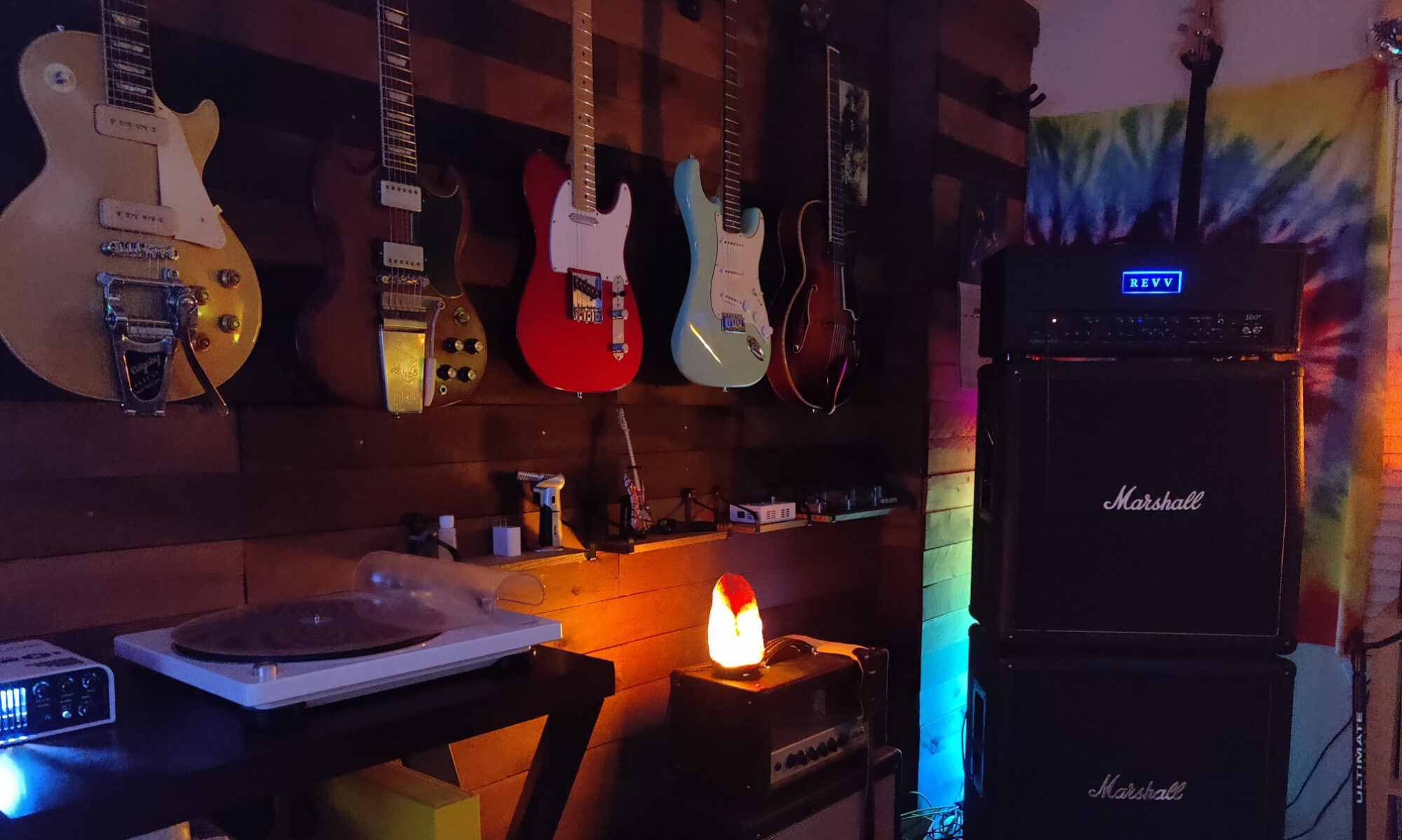
This is entirely too cool to not share.
A frontier without an ecosystem is not stable
This is from Satya Nadella, CEO of Microsoft. This text is all from his post on X.com.
I’ve been thinking a lot about the future of the firm in an AI-driven economy.
This transition is different than any previous platform shift. In the past, we used digital systems to enhance human capital. This is the first time we can create a real cognitive loop between people and digital systems. That is a mind-bender, because it changes how we even conceptualize work inside an enterprise.
What is at stake is not some digital tool or system and its use, but how organizations continue to learn, build IP, differentiate, and thrive in a world where AI models can continuously absorb the expertise of humans and organizations and commoditize it.
Every company is going to have to build what I think of as human capital and token capital. Human capital comprises the knowledge, judgment, relationships, ingenuity, and pattern recognition of its people, while token capital is the firm’s AI capability it builds and owns.
Importantly, human capital does not become less valuable as token capital grows. It only becomes more valuable! I believe human agency will be the driver of token capital growth. Humans will set ambitious goals, connect dots across domains, build relationships, and recognize patterns that matter most. Without human direction, you have compute running in circles.
This means the real opportunity is not in picking the best model but instead in building a learning loop on top of models where human capital and token capital compound. You can offload a task, or even a job, but you can never offload your learning. The future of the firm is the ability to compound that learning across people and AI.
This requires a new architectural approach where every business is able to build agentic systems that improve over time, while still retaining control over their IP. A company should be able to switch out a “generalist” model without losing the “company veteran” expertise built into their learning system. This is the key “test” of your control and sovereignty in the era ahead.
Companies need to turn their workflows, domain knowledge, and accumulated judgment into AI systems that improve with each use. Private evals should capture whether a model is actually improving against outcomes that matter to the business (not just external benchmarks!). Private reinforcement learning environments should let models grow stronger on real traces from inside the organization. Its knowledge base makes institutional memory queryable and use of tokens more efficient.
This loop becomes the new IP of the firm. I think of it as a hill climbing machine. And unlike most assets, it compounds. Every improved workflow generates better training signal, which accelerates the accumulation of tacit knowledge unique to the firm. The companies that build this early will have an advantage that is hard to replicate, regardless of any new individual model capability.
The last thing any of us want is a world where every company across every sector is ceding value to a few models that eat everything they see. If all the value is accrued by only a few models, the political economy will simply not tolerate it. There is no societal permission for an AI future that hollows out entire industries.
Think about what happened in the first phase of globalization where entire industrial economies were hollowed out by outsourcing. The GDP numbers looked fine on the surface, but the displacement was real and the consequences are still being felt. Let us not bring that dynamic into the AI era, with a small number of AI systems capturing all the economic returns, while entire industries find their knowledge commoditized right out from underneath them.
In my view, our priority has to be building a frontier ecosystem, not just a frontier model, so value flows broadly across every company, every industry, and every country. One where every organization can own the learning loop that encodes its institutional knowledge, compounding its human and token capital.
This is the ethos I’ve grown up with where platforms enable more value on top than is captured inside, and where every company can continuously innovate and build value of its own.
When that happens, companies will create value for themselves and for the economy around them. Employees will see their expertise amplified and their judgment become part of systems that make it replicable and scalable and the benefits accrue to the companies and communities around them.
That is how companies drive value for themselves and the broader economy. And it is the stable equilibrium we should build together.
PewDiePie did it again
Just watch the video. Local AI but done better. Not for Mac or Windows but that’s great. Fire up some Ubuntu.
Motion of stars around Sagittarius A*
This is how we first *saw* the massive black hole at the center of our galaxy.
Amputee Makes History with APL’s Modular Prosthetic Limb
Holy crap, this is brilliant. Johns Hopkins is making miracles. – A Colorado man made history at the Johns Hopkins University Applied Physics Laboratory (APL) this summer when he became the first bilateral shoulder-level amputee to wear and simultaneously control two of the Laboratory’s Modular Prosthetic Limbs. Most importantly, Les Baugh, who lost both arms in an electrical accident 40 years ago, was able to operate the system by simply thinking about moving his limbs, performing a variety of tasks during a short training period.
A Closer Look at Blown-Lift with Electra’s Ultra Short Aircraft
Wow, very cool tech. A true hybrid power aircraft…
Exposing The Solid State Donut Battery. It’s Over.
Here is the video, and below is some info from Grok relating to Ziroth, the YouTube channel.
From Grok…
Ziroth is a popular YouTube channel (@ZirothTech) focused on energy engineering, clean tech innovations, and technologies that support the transition to a zero-carbon future.
Key Details
- Creator/Founder: Dr. Ryan Inis Hughes (often referred to as Ryan Hughes), a multidisciplinary engineer with a PhD. He started the channel in 2020 while working on his thesis and has since built it into a team effort with animators, editors, researchers, and staff. ziroth.com
- Subscribers: Around 500K–505K as of recent data (it has grown steadily past 400K). youtube.com
- Videos: Roughly 127 videos, plus Shorts. Total views exceed 85 million. socialblade.com
Content Style and TopicsThe channel highlights exciting science and engineering projects in areas like:
- Batteries and energy storage (e.g., sodium batteries, solid-state claims, thermal storage)
- Electric motors and propulsion (superconducting motors, high-efficiency designs for aviation/transport)
- Electrification and power technologies
- Broader clean tech, renewables, and efficiency innovations
Videos often feature in-depth analysis, animations, interviews with inventors, and critical examinations of hype vs. reality. Ryan emphasizes accurate science reporting and factual evidence.
luvkilomedia.comRecent/Popular Videos include:
- Exposés on questionable claims (e.g., “Exposing The Solid State Donut Battery”)
- Breakthrough coverage (e.g., CATL’s sodium batteries, ultra-efficient motors, bionic/revolutionary engineering) youtube.com
The tone is optimistic about green tech progress but skeptical of over-hyped or misleading claims.
For All Mankind s01e10 post-credits scene. The Sea Dragon launch
This is too damn cool not to share.
The Struggle With Segovia.
Christopher Parkening was a student, and a TOTAL badass.
Rollin’ Coal in a Turbo Rice Tractor in Thailand
I absolutely LOVE these Thai videos. Thanks to CB Media!